IPO News·3 min read
Understanding IPO Allotment in India: Rules, Process, and How to Check Status
Learn the ins and outs of IPO allotment in India, covering essential topics like allotment rules, oversubscription, basis of allotment, share credit, refunds, and how to check your IPO allotment statu
IPO allotment is a critical phase in the initial public offering (IPO) process, determining which applicants receive shares once the subscription period ends. Allotments can vary, offering investors a full, partial, or no allocation based on application demand, investor category, and regulatory guidelines.
In India, the allotment process is governed by specific regulations and can significantly influence investor decisions. Understanding these rules is essential, particularly in cases of oversubscription, where demand for shares exceeds supply.
**What Is IPO Allotment?**
It is the distribution of shares to eligible applicants post-subscription. Companies define categories and conditions for share offerings. In oversubscription scenarios, not all applicants may receive shares, and the allotment process adheres to established regulatory frameworks.
**How IPO Allotment Works in India**
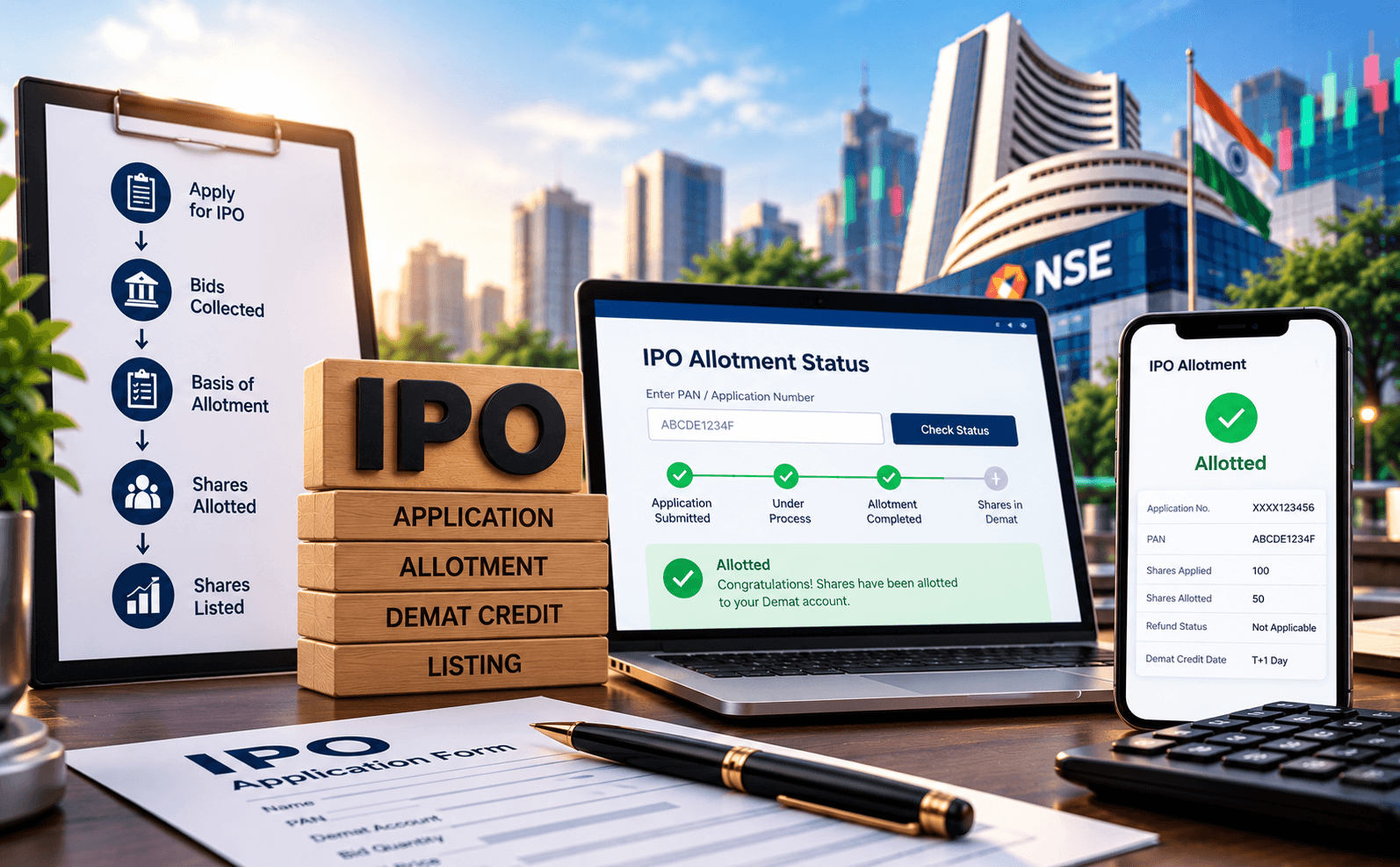
The allotment follows several steps:
1. End of IPO subscription.
2. Processing of application data by intermediaries.
3. Assessment of demand across investor categories.
4. Finalisation of the allotment basis.
5. Publication of allotment status.
6. Crediting shares to successful applicants' demat accounts.
7. Release of funds for unsuccessful applications.
8. Listing of shares for trading.
**Understanding the Basis of Allotment**
The basis of allotment explains the share distribution methodology, which can become complex in oversubscribed IPOs. Retail investors might not always receive shares, especially if demand exceeds supply.
**Impact of Oversubscription on Allotment**
Oversubscription signifies high demand and complicates the allotment process. A highly subscribed IPO does not guarantee allocation, and resulting competition can affect individual outcomes.
**Allocation Rules by Investor Category**
Different rules apply for various investor categories:
1. **Retail Individual Investors:** May face allotment limitations during oversubscription.
2. **Non-Institutional Investors (NII):** Includes high-net-worth individuals with specific allocation guidelines.
3. **Qualified Institutional Buyers (QIBs):** Subject to distinct regulatory allotment rules.
4. **Reserved Categories:** Shareholders may receive preferential allotments, depending on the issue terms.
**Checking Allotment Status Online**
Investors can verify their allotment status via official registrars or exchange facilities by providing requisite details, such as PAN or application number.
**What If You Don’t Get Allotment?**
Unsuccessful applicants typically receive refunds or have funds unblocked based on the payment method used. A lack of allotment doesn’t imply invalid applications, especially in oversubscribed issues.
**Credit to Demat Accounts and Selling Shares**
Shares are usually credited after the announced schedule, and while allotment indicates shares have been assigned, they cannot be sold until after the formal listing.
**Challenges in IPO Allotment**
Common issues include oversubscription, incorrect application details, payment problems, and eligibility mismatches. To verify outcomes, check with the official registrar or intermediaries.
**Frequently Asked Questions**
- The IPO allotment timeline varies and should be confirmed via official updates.
- Submitting multiple applications does not guarantee receipt of shares.
- Allotment status can often be checked using PAN.
**Conclusion**
Understanding IPO allotment is crucial for investors looking to participate in public offerings. Awareness of the process and its intricacies can help in accurately tracking applications and analyzing potential outcomes. Always refer to official documents for the most current information.
**Disclaimer:** This article serves as educational content and is not investment advice. Investors are encouraged to consult official sources and regulatory information from the Securities and Exchange Board of India (SEBI) before making investment choices.
IPO GMPGrey Market PremiumIPO NewsIPO SubscriptionIPO AllotmentIPOGrey MarketMarket News
Related IPO Resources